Thứ Năm, 15 tháng 12, 2005

Firefox Extensions and the end of Windows?


For some time now, the pundits of the software industry have speculated on Google's affinity for the Firefox browser. When Google registered the Gbrowser domain name, for instance, the whole blogosphere was abuzz. And hiring some Firefox developers certainly did nothing to quiet the rumor mill.

Recent stories on Google's blog point to further development of Firefox extensions, which are modules used to -- uhm -- extend the capabilities of the Mozilla-based browser. For instance, Google's Blogger Web Comments extension allows a surfer to see what other bloggers are saying about the site they're visiting... and to add related commentary on their own blog.

But this is tangential to the point of this post. The key question remains: what is Google really up to?

A Google PC?


In May, SquirrelNet had an interesting take:

GBrowser would make it easier for Google to control both data and applications, bypassing Microsoft entirely. In fact, it's conceivable that Google could launch its own PC which wouldn't need any Microsoft software. Here's what the Google PC could look like:

* A low-cost PC running the Linux operating system (saves $100 to $150 versus Microsoft's operating system)
* Features the GBrowser, the much speculated Google Browser


Throw OpenOffice into the mix, Evolution as a thick-client email package, well, you get the picture. Google could offer a full-fledged PC -- virtually indistinguishable from a Windows-based system -- at a significant discount from any competing Windows platform.

Firefox as the OS?


A parallel path is simply to continue to augment Firefox with capabilities until it is the operating system. Tight integration with Google's online properties (search, email, local services, etc.) is happening as we speak. Future integration will come in the form of VoIP (voice-over-IP) telephony, IPTV (television delivered over the Internet), and converged services we have yet to imagine.

Furthermore, Google's continued experimentation with -- and support of -- AJAX portends a day in which thick-client applications are altogether unnecessary. AJAX (a universally loathed acronym among developers) represents a set of technologies that allow faster, easier user-interfaces on browsers. An example is the drag-and-drop interface used by Google Maps.

Continued development and support of AJAX by the Google and Firefox teams mean that more and more users will simply not need thick-client applications like Word, Excel, or Access. Over time, those applications will run as commodity services -- over secure connections, mind you -- at a server farm.

These services could run at Google's farm or could be installed within a company's firewall. Google already sells a bright yellow box called the Google Search Appliance, which delivers internal network (intranet) search for organizations.

GSA
Google Search Appliance

The Google search appliance is simply one example of a plug-and-play box that companies can simply strap into their infrastructure.

Consider a Google Office appliance that would deliver Microsoft Office capabilities for a fraction the cost of licensing Office for every desktop.

The roadmap...


The roadmap might simply be: hook users on free services that leverage the tremendous power of Google's serverplex. Deliver an increasingly capable set of services without requiring licensing costs. Upsell companies appliances that securely deliver similar services within the corporate firewall.

At what point do we become so dependent upon Google for the services that facilitate our every day lives (and our businesses, for that matter) that the OS becomes irrelevant? For many users, that day has already come and gone.

The end of anonymity on the Internet?


The slogan for MSNBC is, if memory serves, "we're the lowest-rated cable news outlet!" The following, near-hysterial description of the "Trusted Platform Module" possesses all the intellectual rigor of a calculus contest with Jessica Simpson as judge:

...over 20 million PCs worldwide are equipped with a tiny security chip called the Trusted Platform Module, although it is as yet rarely activated. But once merchants and other online services begin to use it, the TPM will do something never before seen on the Internet: provide virtually fool-proof verification that you are who you say you are...

...once you’d registered yourself and your computer with an Amazon or an e-Bay, they’d simply look for the TPM on your machine to confirm it’s you at the other end...


Uhmm, suuuuuuuuurrrrrre. Let's see... I routinely use at least four machines to access the Internet. And, on any given day, I might use someone else's machine (say, my Dad's computer) to shop or surf. So Amazon is going to not let me order because I'm not on my "trusted platform"?

The odds of this happening are about the same as MSNBC beating Fox News in the Nielsens.

MSNBC: The end of anonymity on the Internet?

Thứ Tư, 14 tháng 12, 2005

The 10 Most Puzzling Ancient Artifacts


This will set the hairs on the back of your neck to tingling...

#10 The Grooved Spheres:

Over the last few decades, miners in South Africa have been digging up mysterious metal spheres. Origin unknown, these spheres measure approximately an inch or so in diameter, and some are etched with three parallel grooves running around the equator. Two types of spheres have been found: one is composed of a solid bluish metal with flecks of white; the other is hollowed out and filled with a spongy white substance. The kicker is that the rock in which they where found is Precambrian - and dated to 2.8 billion years old! Who made them and for what purpose
is unknown...


The 10 Most Puzzling Ancient Artifacts

The media's war


The invaluable Thomas Sowell just nails it in his latest at Townhall:

The media seem to have come up with a formula that would make any war in history unwinnable and unbearable: They simply emphasize the enemy's victories and our losses. Losses suffered by the enemy are not news, no matter how large, how persistent, or how clearly they indicate the enemy's declining strength...

...The fact that these [doom-sayers] have been proved wrong, again and again, does not [stop the media. They] claimed that terrorist attacks would make it impossible to hold the elections last January because so many Iraqis would be afraid to go vote... But a higher percentage of Iraqis voted in that election -- and in a subsequent election -- than the percentage of Americans who voted in last year's Presidential elections...


If Churchill had had to contend with the negativism of today's mediacrats, the British population would today speak German. To the extent that the defeatocrats refuse to take global Islamofascist terror seriously, the electorate should likewise refuse to take them seriously. As candidates, appointed officials, or anywhere near the halls of power.

Thứ Ba, 13 tháng 12, 2005

Microsoft's Local Live


Here's a "bird's eye" view of a neighborhood in Maryland, courtesy of Microsoft's Local Live service. Zooming around the country, I now half-expect to see people coming out of their houses and waving their fists at me to quit spying on them.

Thứ Hai, 12 tháng 12, 2005

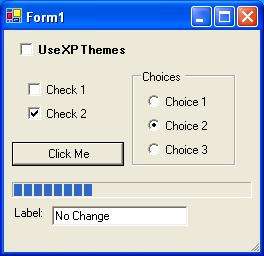
Visual Studio 2005: "Upgrade with extreme caution"


T has an entertaining description of attempting to migrate his Visual Studio projects to Giant Cluster**** of incompatibility version 8, *er*, I mean Microsoft Visual Studio 2005.

...First up is the new winforms-based UI that immediately takes a 200MB chunk of your system memory. You'd think that with that much system memory being used, the entire application and all supporting libraries would be running directly out of RAM, thus making the interface very snappy...but you'd be wrong. It is easily 30-50% slower for things like button clicks, menu pulldowns, and most disturbingly, compilations. These inefficiencies all seem to root from the "highly-polished" (read: stupid animations) of just about every thing on the screen...


Giant Cluster**** of incompatibility version 8

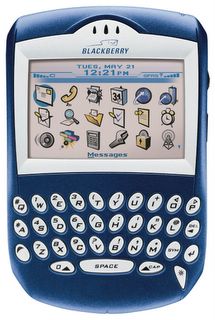
BlackBerry 7290 Review: Outstanding convergence device


I'd heard lots of complaints about the 72XX's abilities as a phone. It's definitely not an ideal form-factor, but it works. And with the hands-free device (included), you should have very, very few issues.

As an email and web-surfing device, it excels. While it may not have the full GUI of the "brick-style" (heavier and larger Windows Mobile) devices, you get most of what you really need without having to download entire attachments. That's right, the BlackBerry server will download and read the attachment and send only the fraction you need to see on your display. It works seamlessly and saves a lot of time and effort - there's no need to download an entire file when you just want to read the first page or two.

I've played with all the latest devices (even new Windows devices that haven't come out yet) and I wouldn't trade any of them for the BlackBerry 72XX. It's lighter, smaller, and easier to use. The convenience of the thumbwheel acting as a selector and the button next to it "escaping" out of any menu is something that 98% of all other devices haven't figured out yet.

A couple of nits to pick: the earpiece on the hands-free needs a better way to attach firmly to your ear. In addition, I haven't yet figured out how to keep my place on a web page and check my email (without backing out of the web page). Maybe there's a way, but no one I know has figured it out either. Other than that... great device. Highly recommended.